Bridging Science
and Society!
accessible, inclusive, and future-ready.

Three pillars

Our national fellowship builds inquiry-based, inclusive teaching and digital confidence. Every trained educator becomes a catalyst for curiosity and scientific temperament in young minds.


Students
Teachers
master trainers

Curiosity Labs turn classrooms into discovery zones where students learn science by doing.
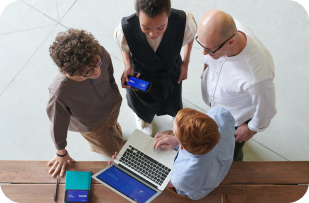
From training to confidence, teachers found their voice and transformed classrooms into inclusive spaces.

Youth became citizen scientists, using evidence to solve local problems and question the world.
AI in the Classroom
Empowering Teachers through Intelligent Assistance
Teachers manage diverse classrooms with limited time.
The challenge is not intent.
It is capacity.
What changed on the ground:
● Lesson planning time reduced through AI-assisted design
● Multilingual translation enabled wider student participation
● Real-time feedback helped teachers spot learning gaps early
What stayed intact:
● Teacher authority in decision-making
● Human judgement in assessment
● Classroom relationships
The real shift:
● Teachers regained time to engage with students
● Technology became a silent support system
● Confidence replaced overload
Consider this:
● What could you do if routine tasks no longer consumed your teaching hours?
The Cascade Effect
How One Teacher’s Training Reaches Hundreds of Learners
Impact does not scale by adding more programs.
It scales by empowering people.
What the cascade model does:
● Trains one teacher deeply
● Enables that teacher to mentor peers
● Extends learning across schools and districts
What we observed:
● Curiosity Circles formed in local communities
● Hands-on STEM learning used low-cost materials
● Teaching practices spread organically
The result:
● One trained teacher influenced hundreds of students
● Professional confidence travelled faster than formal mandates
● Learning became locally rooted
Ask yourself:
● Who could you enable so impact continues without you?
Open Access in Action
Bringing Research to Every Classroom and Community
Research often stays locked behind paywalls.
Students rarely see how science works in real life.
What we enabled:
● Open research mapped to school curricula
● Translated summaries for classroom use
● Data access for community-level problem solving
What changed:
● Students discussed real climate and health data
● Teachers connected theory to current research
● Local decision-makers used evidence, not assumptions
The deeper outcome:
● Science became visible
● Knowledge became usable
● Trust began to grow
A question worth asking:
● What happens when learners engage with living science, not just textbooks?
Curiosity Labs in Action
When Classrooms Turn into Discovery Zones
Science changes when students touch it.
What happened inside Curiosity Labs:
● Students built simple models using low-cost materials
● Questions replaced rote answers
● Failure became part of learning, not something to avoid
What teachers noticed:
● Higher participation from quiet students
● Better concept retention through hands-on work
● Stronger links between theory and daily life
The shift was subtle but lasting:
● Science moved from the board to the bench
● Learning became active, not observed
Ask yourself:
● When did students last discover something on their own?
From Training to Confidence
How Teachers Reclaimed Their Voice in the Classroom
Many teachers know the subject.
They struggle with delivery in changing classrooms.
What the fellowship unlocked:
● Confidence to experiment with teaching methods
● Comfort with digital tools
● Support from peers facing the same challenges
What changed over time:
● Teachers spoke less, students explored more
● Lessons became flexible, not fixed
● Classrooms felt inclusive by design
The deeper change:
● Teachers stopped copying methods
● They began owning their practice
Reflect for a moment:
● What happens when a teacher trusts their own judgement?
Youth as Citizen Scientists
Learning Science by Solving Local Problems
Science feels distant until it solves something close.
What young participants worked on:
● Local climate observations
● Water and air quality data
● Community-level science questions
How learning shifted:
● Data replaced assumptions
● Evidence shaped discussion
● Students saw how research informs decisions
What stayed with them:
● A sense of responsibility
● Respect for evidence
● Confidence to question claims
The outcome:
● Science became relevant
● Learning gained purpose
Consider this:
● What if every student learned science by serving their community?